AC Repair in Auburn, AL
What Happens When Your AC Fails During an Auburn Summer
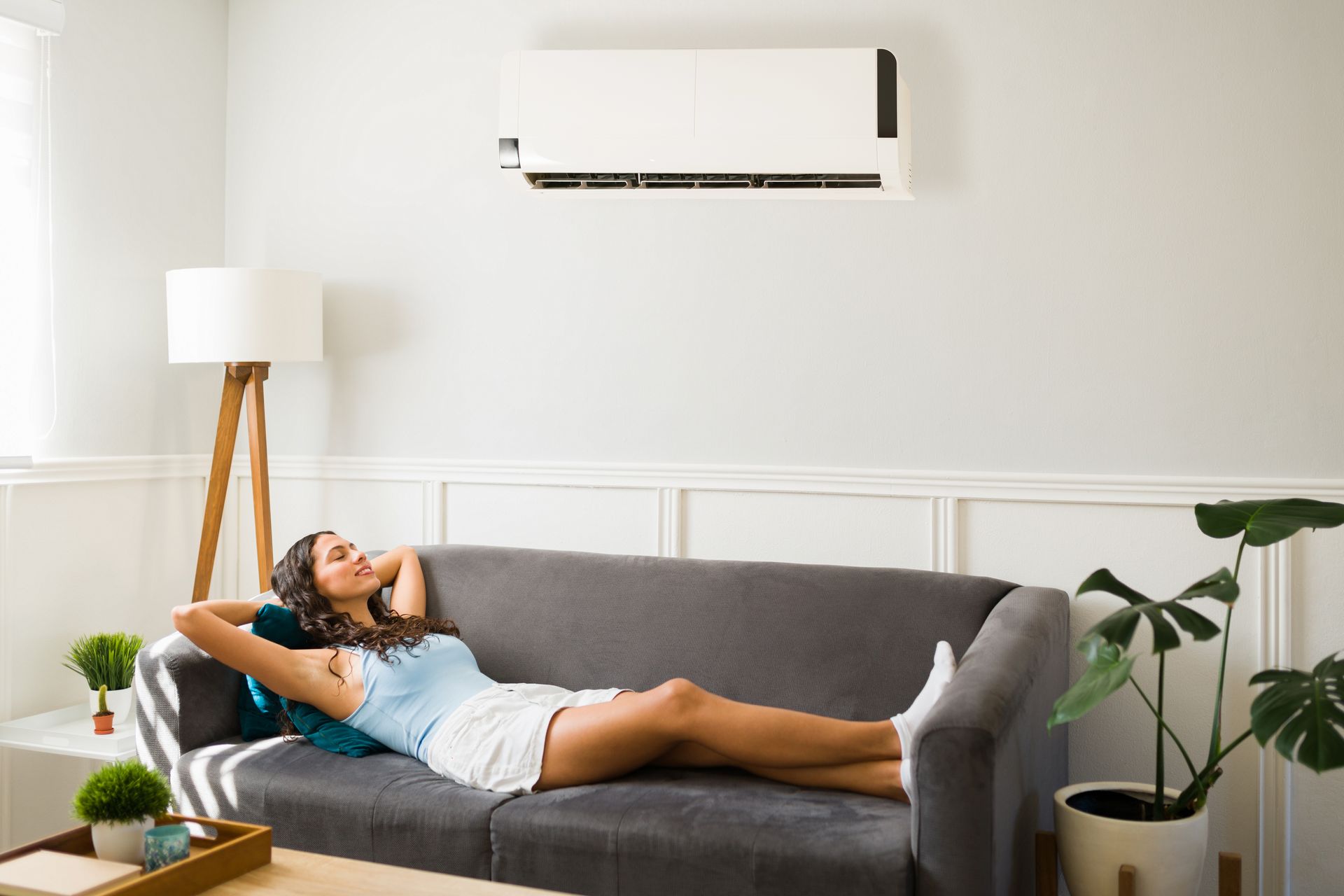
Summer in Auburn is not forgiving. Temperatures regularly climb past 95 degrees, and the Gulf moisture that moves through Lee County pushes relative humidity well into the 70s on most July and August afternoons. When the AC stops working in a house on Glenn Avenue or a rental near the Wire Road corridor, indoor temperatures can hit 85 degrees within a few hours. That kind of heat is genuinely dangerous for children, elderly residents, and anyone with a respiratory condition, and waiting until the next business day is not always a viable option.
C&G Heating and Air provides AC repair throughout Auburn, AL, and the surrounding communities of Lee County. Our technicians are available 24 hours a day, seven days a week, because AC failures rarely happen on a convenient schedule. Whether the problem is a failed capacitor, a refrigerant leak, or a compressor that has finally given out after years of heavy use, we diagnose the issue accurately and walk you through your options before any repair work begins.
Auburn's housing mix creates a wide range of AC situations. Older homes near College Street and Magnolia Avenue often have systems that were installed 15 to 20 years ago and are now running on worn components. Newer subdivisions along Shug Jordan Parkway tend to have more recent equipment, but those systems still require attention when something fails unexpectedly. No matter the age or brand of the equipment, C&G has the training and parts to get your home cooling again.
Common AC Problems Homeowners in Auburn, AL Experience
Refrigerant Leaks and Loss of Cooling Capacity
Refrigerant leaks are among the most frequent AC problems we find in Auburn homes, particularly in systems that are more than eight years old. When refrigerant levels drop, the system struggles to pull heat from indoor air, which leaves rooms feeling stuffy and warm even when the unit is running constantly. You may notice that the air coming from your vents is not as cold as it used to be, or that the system runs for long stretches without reaching the thermostat's set temperature. Low refrigerant is never a simple recharge situation. The leak itself must be located and repaired, or the problem will return within a season.
Compressor Failures in Aging Auburn Systems
The compressor is the heart of any central air system, and it takes a real beating in Auburn's climate. Running for eight to ten hours daily through a long Alabama summer puts serious mechanical stress on the compressor motor. Electrical surges during thunderstorms can damage internal windings, and a lack of regular maintenance accelerates wear on all moving parts. When the compressor fails completely, the system stops producing cold air entirely. Compressor replacement is one of the more significant AC repairs a homeowner faces, but it is often worth doing on a system that is otherwise in good condition with years of useful life remaining.
Electrical and Capacitor Issues
Capacitors and contactors are small electrical components that carry heavy loads every time your AC cycles on. In Auburn, where systems run hard from April through October, these parts wear out faster than the manufacturer's rated lifespan suggests. A failing capacitor typically causes the system to struggle on startup, produce a low humming sound, or simply refuse to turn on at all. These components are straightforward to replace, and catching a failing capacitor early can prevent a much more expensive compressor failure down the line. This is exactly the kind of problem that a pre-season inspection is designed to find.
Warning Signs That Your AC System Needs Repair in Auburn, AL
Warm Air and Reduced Airflow Through Vents
One of the clearest signals that something is wrong is noticing that your vents are producing air that feels warm or only slightly cool. This can point to several problems, including a refrigerant leak that reduces the system's ability to absorb heat, a dirty evaporator coil that restricts the heat transfer process, or a compressor that is beginning to fail under the strain of Auburn's cooling season. Reduced airflow, where the air coming from your registers seems weaker than usual, often points to a clogged filter, a blocked return vent, or a blower motor that is drawing excessive amperage as it wears out. Either symptom should be addressed promptly, because running a struggling system hard in the Alabama heat significantly increases the risk of a more expensive failure.
Strange Noises Coming From Your AC Unit
A properly functioning AC system operates with a steady, relatively quiet hum. Banging or clanking from the outdoor unit usually points to a loose or damaged component inside the compressor housing. A squealing noise from the air handler often means a failing blower motor bearing. Clicking sounds that repeat at startup or shutdown can indicate a relay problem or a failing contactor that is not making clean electrical contact. None of these sounds resolve on their own. In every case we have seen, ignoring an unusual noise means a smaller repair eventually becomes a larger one.
Unusually High Energy Bills
Auburn homeowners who notice a sudden spike in their electric bill, without a corresponding change in how much they are running the AC, should treat it as a warning sign rather than a coincidence. An inefficient system works harder to maintain the same indoor temperature, and that extra effort shows up directly on the utility statement. Dirty coils reduce heat transfer efficiency, low refrigerant forces longer run cycles, and worn electrical components increase power consumption per hour of operation. Addressing the underlying issue usually brings the utility bill back to its normal seasonal level within the first month after the repair.
Our AC Repair Process in Auburn, AL
Step 1: System Inspection and Diagnostic Testing
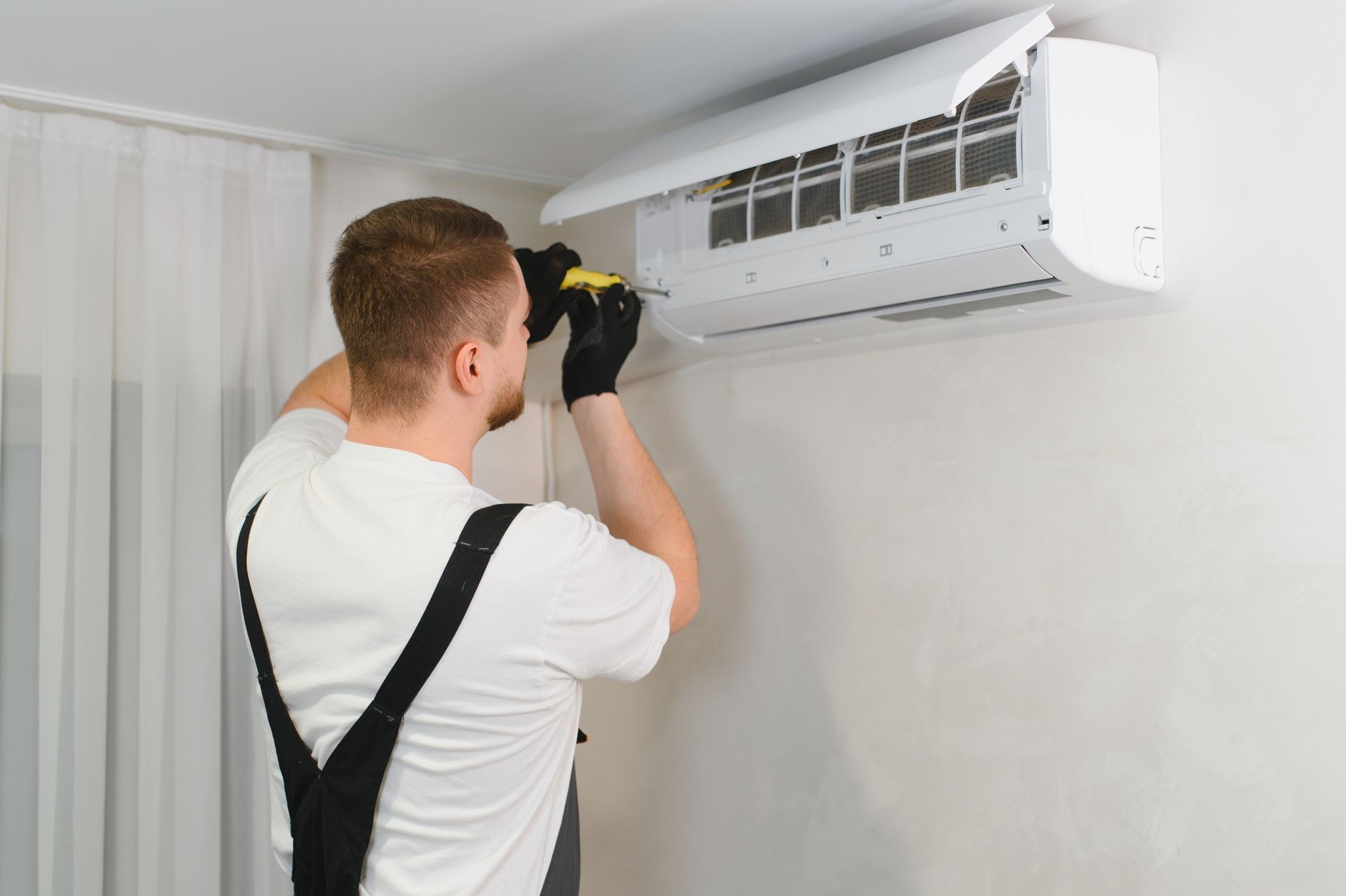
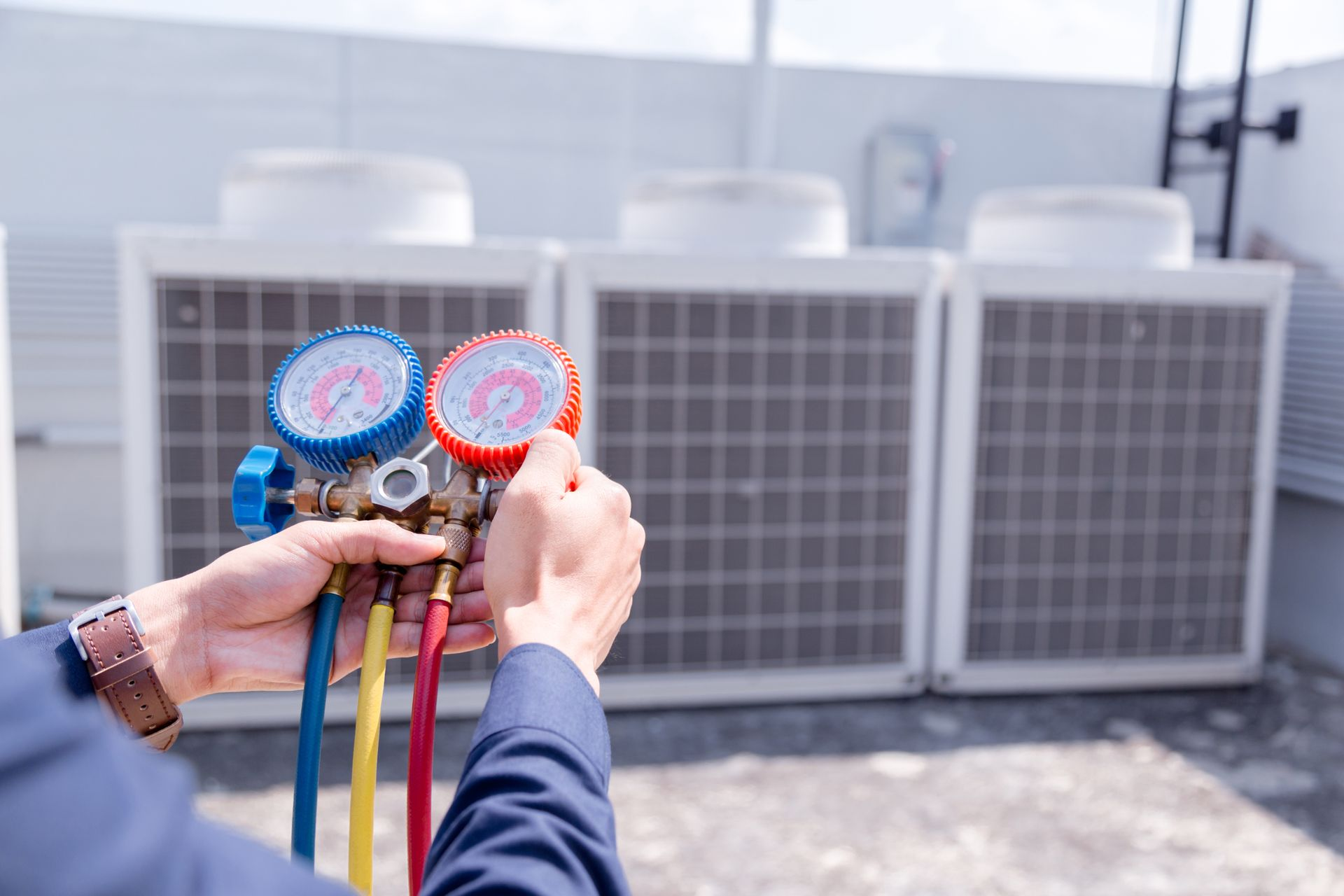
Every repair begins with a thorough inspection of the entire system rather than just the symptom that prompted the call. We check refrigerant pressure, electrical voltage and amperage at the compressor and blower motor, thermostat calibration, airflow measurements at the supply and return registers, and the physical condition of all major components including the coils, condensate drain, and electrical panel connections. This comprehensive approach gives us a full picture of the system's health and helps identify problems that may not yet be causing obvious symptoms but could trigger a second service call if left unaddressed.
Step 2: Problem Identification and Repair Estimate
After completing diagnostics, we walk you through exactly what we found and what it means for your system. We explain the repair options clearly, including what happens if a marginal component is repaired versus replaced entirely, and we give you a written estimate before any work begins. If we find multiple issues during the diagnostic, we prioritize them by urgency and cost so you can make an informed decision about what to address now and what to monitor. Surprises on a final invoice are not how we do business.
Step 3: Permit Verification and Code Compliance
Certain AC repairs and all full unit replacements in Auburn must comply with the mechanical and electrical codes enforced by the Auburn Department of Community Development, located at 144 Tichenor Avenue, Suite 6, Auburn, AL 36830. Their building division can be reached at (334) 501-3070. Work performed without proper permits can void manufacturer warranties, create problems during a future home sale, and leave the homeowner liable if a later inspection flags unpermitted work. C&G handles all permit applications and code compliance so you do not have to navigate that process alone.
Step 4: Repair Execution and Component Replacement
Once the scope of work is confirmed, our technician completes the repair using manufacturer-approved parts and proper procedures. We stock common replacement components on our service vehicles, which means most standard repairs, including capacitor replacements, contactor swaps, blower motor installations, and minor refrigerant work, can be completed on the same visit. More complex repairs that require special-order parts are scheduled as quickly as parts availability allows, and we will tell you honestly if a temporary measure can keep the system functional in the meantime.
Step 5: System Testing and Performance Verification
Before leaving any job, we run the system through a full operational test. We measure supply and return air temperature differential, verify refrigerant pressures fall within the manufacturer's specified range for current outdoor conditions, confirm airflow through every register, and check that the thermostat is communicating correctly with the air handler and outdoor unit. You receive a full explanation of what was repaired, what was found during the diagnostic, and what to watch for going forward.
AC Components and Equipment We Repair in Auburn, AL
Scenario 1: Your System Is Under 10 Years Old
If your system is less than ten years old and has been reasonably maintained, repair almost always makes the most financial sense. At this age, the compressor, heat exchanger, and coil assemblies still have years of useful life ahead of them, and the refrigerant the system uses is still widely available and affordable. A failed capacitor, a refrigerant charge that has dropped due to a small leak, or a blower motor that has worn out are all repairs that restore the system to full function without significant expense. The payoff period on a targeted component repair is short, and you preserve the value already invested in the equipment.
Scenario 2: Your System Is 10 to 15 Years Old
In the 10 to 15 year range, the decision requires more careful evaluation of what specifically failed and what condition the rest of the system is in. If the repair cost is under 40 percent of what a comparable replacement system would cost, and the compressor and coil assembly are still in good condition, repair typically makes economic sense. However, if the compressor has failed and the system uses R-22 refrigerant, which was phased out of production in 2020, you may face ongoing refrigerant supply challenges and sharply higher recharge costs that make replacement a better long-term choice. This is a conversation we have directly with you after running full diagnostics, because the right answer depends on your specific equipment and its actual condition.
Scenario 3: Your System Is Over 15 Years Old
For systems that are 15 years or older, the economics of repair versus replacement need to be weighed more honestly. Auburn's summers push older systems hard, and a unit that has run through a decade and a half of Alabama heat has often reached the point where multiple components are approaching the end of their service life simultaneously. Repairing the most visible failure may buy another season or two of operation, but a new high-efficiency system will deliver lower utility bills, better humidity control on those 90 percent humidity August afternoons, and a manufacturer warranty that protects the investment for the next decade. We present both options with clear numbers so you can decide based on your budget and how long you plan to stay in the home.
AC Repair vs AC Replacement for Auburn Homeowners
When Repair Is the Right Choice
Repair makes the most sense when the system is relatively young, the problem is isolated to a single component, and the cost of the fix is reasonable relative to the equipment's remaining life expectancy. Single-component failures such as a bad capacitor, a failed contactor, or a leaking refrigerant line are exactly the kind of problems that targeted repair addresses efficiently. A well-maintained ten-year-old system with a failed capacitor does not need to be replaced. It needs a capacitor. Homeowners who get quoted on replacement when repair is the appropriate answer are paying far more than the situation requires.
When Replacement Becomes the Better Investment
Replacement becomes the smarter financial decision when the compressor fails on a system that is already 14 or 15 years old, when the repair cost approaches or exceeds half the price of a new unit, or when the system uses R-22 refrigerant that is no longer manufactured domestically. Some Auburn homeowners also discover through diagnostics that their system was undersized for the square footage it has been trying to cool, which explains years of long run cycles and never quite reaching the set temperature on hot days. In those cases, replacement with properly sized equipment produces dramatically better comfort and lower monthly utility costs. A competing quote that does not include a load calculation, refrigerant recovery and disposal, or removal of the old equipment is not a fair comparison to a complete installation done correctly.
How Auburn's Climate Affects Your AC System
Gulf Moisture and Humidity Strain on Cooling Equipment
Auburn sits in the middle of Alabama's most demanding cooling zone. Average summer temperatures run between 92 and 97 degrees during July and August, and the Gulf moisture that moves through Lee County regularly keeps outdoor relative humidity at 70 to 80 percent during afternoon hours. That combination forces an AC system to work harder than it would in a drier climate, because the equipment must remove both heat and airborne moisture simultaneously to make indoor air feel comfortable. Every hour of high-humidity operation puts additional stress on the compressor, the evaporator coil, and the condensate drainage system. Systems that do not have their drain lines checked and cleaned regularly are prone to developing clogs that allow water to back up into the air handler, causing operational shutdowns at exactly the wrong time of the season.
Heat Load on Wire Road and College Street Properties
Auburn's dense rental housing along Wire Road and the neighborhoods surrounding College Street creates a specific set of AC challenges that homeowners and landlords in those areas recognize immediately. Many of the units in that corridor run continuously from late April through early October, sometimes serving occupants who are not tracking energy use or system performance the way a long-term homeowner would. Systems in these properties accumulate operating hours at a rate that significantly outpaces typical residential equipment, and the accelerated wear on capacitors, contactors, and compressor motors is something we see consistently when servicing properties in that part of the city. Auburn property owners who have rentals near the university should treat annual pre-season inspections as an operational necessity rather than an optional maintenance item.
AC Systems Found in Auburn AL Homes
Older Homes Near Magnolia Avenue and College Street
The homes closest to Auburn's historic core, particularly those along Magnolia Avenue, College Street, and Glenn Avenue, tend to be older craftsman and bungalow-style residences that were not originally designed for central air conditioning. Many of these homes had ductwork retrofitted at some point in the past several decades, and the duct systems are often poorly sized for the modern high-efficiency equipment that has been installed since. Attic spaces in these homes are also shallower and less insulated than newer construction, which means the equipment works against higher heat loads on peak summer days. When we service AC systems in this part of Auburn, we routinely measure static pressure in the duct system to determine whether the installed equipment can actually perform to its rated capacity, because undersized or partially blocked ductwork is a hidden drag on system efficiency that no repair alone can fully address.
Newer Subdivisions Along Shug Jordan Parkway
Newer construction in the subdivisions along Shug Jordan Parkway, Veterans Boulevard, and the Moores Mill corridor typically came with equipment installed within the last 12 to 15 years. These homes benefit from better insulation, modern ductwork design, and higher-efficiency starting equipment, but the systems are now reaching the age where components begin showing wear from years of Auburn summers. Capacitors and contactors that were rated for 100,000 cycles have been through a lot of heat and humidity. Homeowners in these neighborhoods who have not had a maintenance inspection in two or more years are often surprised when diagnostics reveal worn components that are performing below specification even if nothing has visibly failed yet.
Example AC Repair Project in Auburn, AL
Compressor Failure on Glenn Avenue: Turning Point and Cost Breakdown
Earlier this past cooling season we received a call from a homeowner on Glenn Avenue whose system had stopped producing cold air entirely. The house was a 1,900 square foot craftsman-style home, and the installed equipment was a 12-year-old three-ton system that had been running on its original components. Initial diagnostics showed zero refrigerant pressure on both the high side and the low side, which pointed toward either a catastrophic refrigerant leak or a failed compressor. The turning point in the diagnostic came when we tested the compressor motor windings and confirmed a hard electrical failure, meaning the motor had burned out internally.
The homeowner's first and most reasonable question was whether full system replacement made more sense than a compressor repair on a 12-year-old unit. We walked through both scenarios honestly. The system used R-410A refrigerant, which is still available, and the air handler, the evaporator coil, and the ductwork were all in serviceable condition. Compressor replacement on a 12-year-old system that is otherwise performing well is a legitimate repair option when the rest of the equipment is sound.
Itemized cost breakdown: compressor replacement including parts and labor totaled $1,480. Refrigerant recharge to manufacturer specification added $220. Full diagnostic and system verification: $95. Total repair cost: $1,795. The comparable new system installation estimate for this home ranged from $4,400 to $5,100 depending on equipment selection. The homeowner chose compressor replacement given the condition of the surrounding equipment and their timeline for the property. The system has been running normally since, and the homeowner now has a documented service history and a clear understanding of what to expect over the next three to five years.


Why Auburn Homeowners Choose C&G Heating and Air
Licensed, Insured, and Available 24/7 Across Lee County
C&G Heating and Air has been serving Auburn, Smiths Station, Phenix City, and the surrounding Chattahoochee Valley as a locally owned and operated HVAC company. Our technicians are fully licensed and insured, and our service vehicles carry the diagnostic tools and replacement components needed to resolve most repairs on the first visit. Homeowners who find us through Google consistently rate their experience at 4.9 out of 5 stars across 156 reviews, and that feedback reflects what we hear directly from families and property owners throughout Lee County. We do not subcontract repair work to unfamiliar crews. Every technician who comes to your door is someone we trained and trust to work on our own equipment. Warranty transferability on qualifying installations is something we explain at the time of service so there are no surprises if you ever sell the property or rent it to a new tenant.
AC Repair Costs in Auburn, AL by Property and Issue Type
Standard Repairs on Smaller Homes and Rentals
Most single-component repairs, including capacitor and contactor replacements, refrigerant recharges after a confirmed and repaired leak, and blower motor swaps, fall in the range of $150 to $600 for Auburn homes under 1,500 square feet. Rental properties near Wire Road and Donahue Drive that require emergency after-hours service carry an additional after-hours dispatch fee, but 24/7 availability means the repair can happen before a minor issue compounds into equipment damage. Permit fees for qualifying repairs are always listed as a separate line item on our written estimates, so you see exactly where every dollar is going rather than finding it buried in a flat service rate.
Complex Repairs on Larger Homes in Cary Woods and Turnberry
Homes in Cary Woods, Turnberry, and larger properties in the Moores Mill corridor often run four-ton or five-ton systems to handle greater square footage and higher internal heat loads. Repairs on larger-capacity equipment cost more because the components themselves are heavier-duty and more expensive to source. Compressor replacement on a five-ton unit can range from $1,800 to $2,600 depending on the brand and parts availability at the time of service. Coil replacements, which are sometimes necessary when an evaporator coil has developed a pinhole leak that cannot be reliably patched, typically run $900 to $1,800 for most residential systems in this size range. Every repair we perform, from the smallest capacitor to a full compressor swap, comes with a written estimate that you sign before any work begins.
What Our Technicians Inspect During Every Auburn AC Repair
Refrigerant Charge and Leak Detection
Checking refrigerant charge is one of the first steps in any AC diagnostic because low refrigerant affects system performance so dramatically and quickly. We measure both high-side and low-side pressures and compare them against the manufacturer's specification for the outdoor temperature conditions at the time of the service call. If pressures indicate a low charge, we use an electronic leak detector and UV dye to locate the source before adding any refrigerant. Adding refrigerant to a leaking system without finding and repairing the leak is a short-term fix that puts the homeowner in the same position the following season, often with a larger refrigerant loss and more damage to the compressor from running undercharged.
Electrical Components and Capacitor Condition
We test every accessible capacitor with a digital capacitance meter rather than relying on visual inspection alone. A capacitor can look physically intact while measuring significantly below its rated microfarad value, which means it is already in a failure state that will worsen with continued use. Contactors are inspected for pitting and carbon buildup on the contact surfaces, which indicates arcing wear that reduces the reliability of electrical connection. We also measure amperage draw on the compressor and blower motor separately and compare the readings to the nameplate ratings, because a motor drawing excessive amperage is often beginning to fail mechanically even before any audible or visible symptom appears.
Coil Condition and Airflow Restriction
Both the evaporator coil inside the air handler and the condenser coil in the outdoor unit can develop conditions that reduce system efficiency substantially. Evaporator coils in Auburn's humid climate can accumulate biological growth on the fin surface if the condensate drain has not been maintained, which blocks airflow and dramatically reduces heat transfer capacity. Condenser coils in outdoor units collect cottonwood debris, grass clippings, and airborne particulate over the course of a season, and a significantly fouled condenser coil forces the compressor to operate against elevated head pressure. Both coils are cleaned as part of any comprehensive diagnostic service we perform, not as a separate line-item upsell.
How Long Should Your AC System Last in Auburn, AL
South-Facing Units and High-Runtime Systems Age Faster
A central air system installed in a temperate northern climate under moderate use might last 18 to 22 years. In Auburn, realistic expectations for a well-maintained residential system run 14 to 17 years, and some units in high-rental-density areas of the city see the bottom of that range because of the sheer volume of operating hours they accumulate each season. South-facing outdoor units that receive direct afternoon sun in Auburn run at ambient temperatures that are 10 to 15 degrees higher than units installed on shaded north or east exposures, and that thermal loading accelerates wear on the compressor, refrigerant lines, and electrical components meaningfully. A unit on the south side of a home in Auburn can realistically lose two to three years of effective lifespan compared to an identical unit mounted in a shaded location on the same property. Homeowners who bought a property in Cary Woods or Moores Mill 12 years ago with original equipment should be thinking proactively about the eventual replacement cost even if the system is still running today, because the components inside that unit are approaching the end of their statistically expected service life.
Quick Answers for Auburn Homeowners
How quickly can C&G respond to an AC repair call in Auburn?
C&G Heating and Air offers 24-hour emergency service throughout Auburn and Lee County every day of the year. For urgent calls, we dispatch a technician as quickly as possible, with same-day response available in most situations. Call (334) 326-0687 to reach our team any time, day or night, and we will get someone to you.
Why is my AC running but not cooling the house in Auburn?
An AC that runs continuously without cooling the home effectively usually has a refrigerant issue, a dirty evaporator coil, or a compressor that is failing under load. In Auburn's humidity, a clogged condensate drain can also cause the evaporator coil to ice over and block airflow through the system entirely. A full diagnostic inspection identifies the actual cause accurately before any repair work begins, so the fix addresses the real problem rather than a symptom.
How much does AC repair cost in Auburn, AL?
Most standard AC repairs in Auburn fall between $150 and $800 depending on the problem and the specific parts involved. Compressor replacement is the most significant single repair, typically ranging from $1,400 to $2,600 for residential equipment. C&G provides written estimates before starting any work, and the estimate includes parts, labor, and any applicable permit fees as separate line items so nothing is hidden in the total.
Do I need a permit for AC repair in Auburn, AL?
Routine component repairs generally do not require a mechanical permit, but refrigerant system work and full unit replacements are subject to the Auburn Department of Community Development's requirements at 144 Tichenor Avenue, Suite 6, Auburn, AL 36830, (334) 501-3070. C&G handles all permit applications and code compliance on qualifying jobs so the homeowner does not have to manage that process.
Should I repair or replace my 12-year-old AC system in Auburn?
For a 12-year-old system, repair makes sense when the problem is limited to a single component and the rest of the equipment is in good condition. If the compressor has failed and the repair cost approaches 40 percent or more of a new system's price, replacement becomes a stronger financial choice, especially given Auburn's long cooling seasons. A technician can evaluate both options with real numbers after a full diagnostic, giving you the information needed to decide without any pressure toward the higher-cost option.
Frequently Asked Questions About AC Repair in Auburn, AL
What are the most common reasons an AC stops working in Auburn?
The most frequent causes of AC failure in Auburn homes are failed capacitors, refrigerant leaks, compressor breakdowns, and electrical contactor failures. Auburn's long cooling season and persistent humidity accelerate wear on these components faster than most manufacturer estimates assume. Regular maintenance catches the majority of these issues before they cause a complete system failure during a heat wave, which is why pre-season inspections consistently pay for themselves.
Can C&G repair all AC brands?
Yes. Our technicians are trained and equipped to service all major residential AC brands, including Carrier, Trane, Lennox, Goodman, Rheem, Ruud, American Standard, Bryant, and others. We stock common replacement parts for these brands on our service vehicles to avoid delays on standard repairs, and we have access to supplier networks for less common parts that need to be ordered.
Is emergency AC repair available on weekends and holidays in Auburn?
C&G Heating and Air provides 24-hour service every day of the year, including weekends and holidays. An AC failure during an Auburn summer is not a situation that waits for Monday morning, particularly for households with young children or elderly family members. After-hours service rates apply for emergency calls outside normal business hours, and we explain those rates clearly before dispatching a technician.
How do I know if my AC refrigerant is low?
Signs of low refrigerant include warm or barely cool air from vents, ice forming on the indoor unit or on the refrigerant lines leading to the outdoor unit, longer-than-normal run cycles that never seem to reach the set temperature, and sometimes a faint hissing or bubbling sound near the outdoor unit. Refrigerant does not deplete through normal operation. If your system is low, there is a leak somewhere that must be found and sealed before any refrigerant is added.
What happens if I ignore an AC warning sign in Auburn?
Ignoring early warning signs in Auburn's climate almost always leads to a more expensive repair or a full system failure during the peak of summer. A failing capacitor that causes hard starts stresses the compressor every time the system cycles on. Left unaddressed, a $200 capacitor replacement eventually becomes a $1,500 or higher compressor repair, and sometimes a complete system replacement. The cost of a diagnostic call is almost always far less than the cost of the damage that results from delay.
How long does a typical AC repair take?
Most standard repairs, including capacitor and contactor replacements, refrigerant recharges, and blower motor swaps, are completed within one to three hours on the same service visit. More involved repairs such as compressor replacement or coil work may require a full day or a scheduled return visit if the parts need to be ordered specifically for your equipment. We give you a realistic timeline during the estimate conversation so you know what to expect before any work starts.
Does C&G offer any maintenance plans for Auburn homeowners?
Yes. C&G's Platinum Club maintenance program includes an annual preventive service inspection that checks all major system components, cleans both the evaporator and condenser coils, verifies refrigerant charge, and tests electrical components before the cooling season begins. Platinum Club members receive priority scheduling for service calls and discounts on repairs throughout the year. The program is designed to prevent the kind of failures that cause emergency calls in July.
Will my homeowner's insurance cover AC repair in Auburn?
Standard homeowner's insurance policies generally do not cover AC repairs caused by mechanical failure or age-related component wear. Coverage may apply if the system was damaged by a specific covered peril such as a lightning strike, fire, or a fallen tree. Home warranty policies sometimes cover AC components, though coverage terms and exclusions vary considerably from plan to plan. C&G can provide complete documentation of any repair for insurance or warranty claim purposes.
What is the most effective way to prevent AC breakdowns during Auburn's summer?
The single most effective step an Auburn homeowner can take is scheduling a professional system inspection before the cooling season begins, ideally in March or April. This allows a technician to find worn capacitors, dirty coils, low refrigerant, and other issues before they cause a failure on the hottest day of the year. Replacing air filters every 30 to 60 days during the cooling season and keeping the area around the outdoor unit clear of vegetation and debris also meaningfully extend component life.
How do I find a reliable AC repair company in Auburn, AL?
Look for a licensed and insured contractor with verified local reviews and a transparent explanation of their diagnostic and pricing process. Ask whether written estimates are provided before work begins and whether their technicians are direct employees or subcontractors. C&G Heating and Air carries a 4.9-star rating across 156 Google reviews from homeowners throughout Auburn and Lee County, and our team consists entirely of trained technicians we employ and trust to work on our own equipment. You can reach us at (334) 326-0687 for the Phenix City location or (706) 538-4951 for Columbus.
Related HVAC Services We Offer in Auburn, AL
AC Installation and Replacement
If your system is beyond repair or you are ready to upgrade to higher-efficiency equipment, C&G provides complete AC installation and replacement throughout Auburn and Lee County. We size equipment correctly for your home's square footage and duct capacity, handle all permit applications through the Auburn Department of Community Development, and remove your old equipment responsibly. Full details are available on our AC installation page at candghvac.net/ac-installation and our AC replacement page at candghvac.net/ac-replacement.
Heating Repair and Maintenance
We service furnaces, heat pumps, and all types of residential heating equipment in Auburn. If your heating system needs inspection or repair before Alabama's cooler months, our team applies the same thorough diagnostic process we use on every AC service call. Information about our heating repair services is available at candghvac.net/heating-repair, and general heating services are covered at candghvac.net/heating.
Duct Cleaning Services
Auburn's older homes in particular can accumulate years of dust, allergens, and debris inside ductwork, which reduces system airflow and affects indoor air quality throughout the house. C&G offers professional duct cleaning using equipment that removes buildup throughout the entire duct system rather than just the accessible entry sections. This service is especially valuable after a significant AC repair, when disturbed debris can migrate into the system. More information is available at candghvac.net/duct-cleaning.


Contact C&G Heating and Air for AC Repair in Auburn, AL
Auburn homeowners dealing with a system that is not cooling, producing unusual sounds, or running up the electric bill without explanation do not need to keep guessing at the cause. C&G Heating and Air provides professional AC repair throughout Auburn and Lee County every day of the week, with 24-hour availability for emergency calls. Our technicians diagnose the problem accurately, explain your options clearly, and complete the repair with parts and workmanship that hold up through Auburn's demanding cooling seasons. Call (334) 326-0687 for the Phenix City location or (706) 538-4951 for Columbus. You can also reach us through our contact page at candghvac.net/contact. Do not wait out the heat. Call C&G today.
